

In today’s Stoke and Crewe property market update we focus on what you need to consider before adding an extra bedroom. Recent data for the ST4 postcode area highlights a clear split between capital growth and rental yield. Property strategy is never one-size-fits-all. What works for a short-term flip often damages a long-term buy-to-let portfolio.
At first glance, converting a two-bedroom house into a three-bedroom layout seems logical. Adding a room increases end-value, making it a viable move for a short-term investment. However, for a buy-to-let investor, that same project could create several hidden financial traps.
What the Data Says: Stoke and Crewe Property Market Update
Property Data’s metrics for Stoke-on-Trent and Crewe highlights the difference in yields across these regions in 2-bed and 3-bed properties:
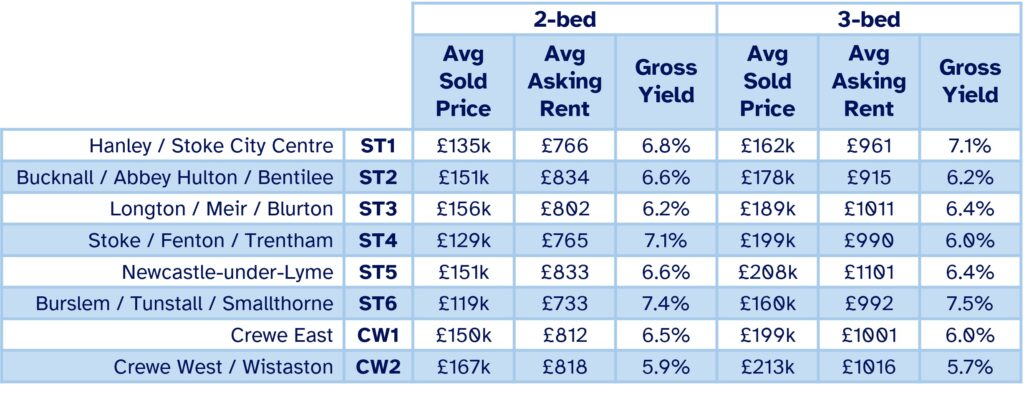
Source: Property Data, September 2026
Higher Mortgages and Lower Yields
Three-bedroom homes in ST4 command an average price of £199k, compared to £129k for two-bedroom units. An investor buying a three-bedroom home, or funding a major conversion, could take on a significantly higher mortgage. While the property holds a higher capital value, the monthly rent does not scale at the same rate. The gross yield drops from 7.1% down to 6.0%.
Smaller Renter Pool
Converting a reception room or splitting a bedroom fundamentally changes how the house functions. Two-bedroom homes in ST4 typically attract young professional couples, single occupants, or small young families. These households prioritise generous ground-floor living space over a surplus third bedroom. Sacrificing a dining room or squeezing in a box room creates a compromised floor plan. Tenants seeking a true three-bedroom family home will reject cramped living quarters, leaving landlords with a narrower applicant pool and longer void periods.
Renovation Capital Efficiency
Refurbishment funds could be better spent on modernising existing space. Updating kitchens, bathrooms, and energy efficiency in a two-bedroom property preserves essential living areas while locking in the 7.1% yield. In contrast, spending capital on structural alterations for a third bedroom can yield weaker percentage returns relative to the total money invested.
An investor should include these factors when evaluating their next deal. Matching the right property layout to the specific investment model ensures the capital works as hard as possible.
Are you looking to acquire your next investment property? Get in touch with our team to discuss our bespoke sourcing services across Stoke and Crewe - Click here