
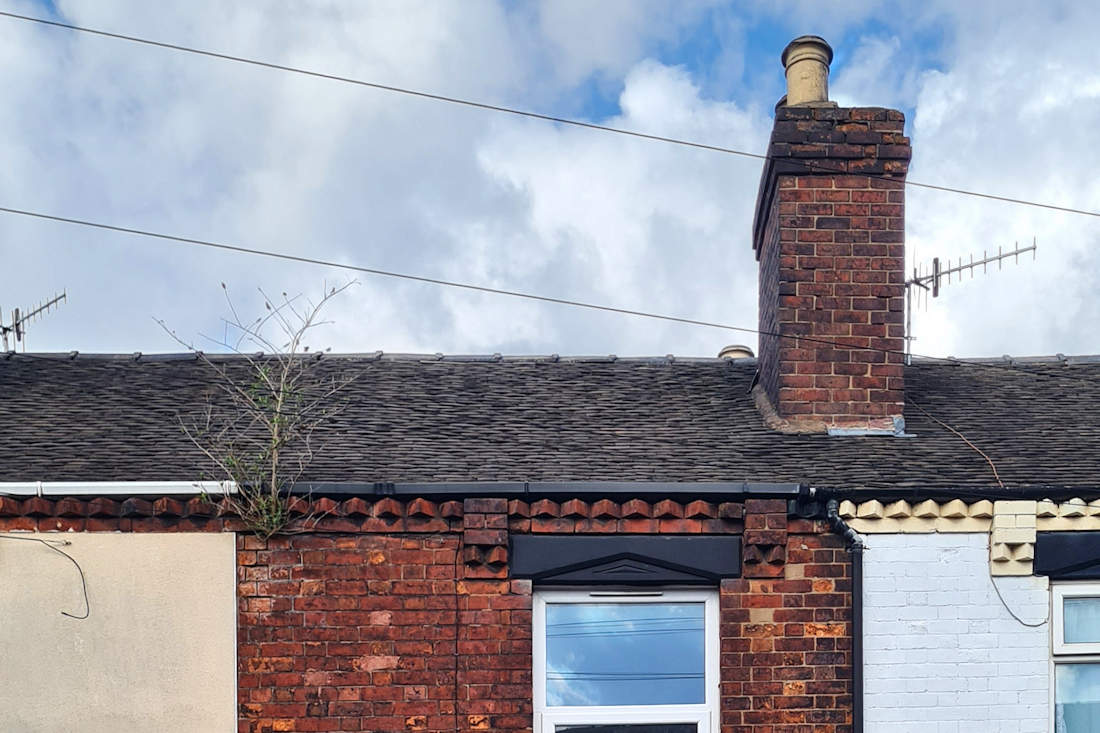
For investors seeking high-yielding residential assets, traditional terraced houses across Crewe and Stoke-on-Trent remain popular choices. They offer accessible entry points, consistent tenant demand, and strong rental yields on paper. However, experienced investors look beyond the initial headline figures and consider the long-term maintenance costs required to keep an older building structurally sound and energy efficient.
In property investment, a failure to budget accurately for structural maintenance quickly erodes net cash flow. Understanding what to look for during the initial viewing stage remains essential for protecting capital.
The Roofing System and High-Level Masonry
When assessing a terrace roof, key areas to monitor include:
The Main Pitch: Visible sagging along the roofline or uneven tiling often indicates underlying timber deflection or historical movement that needs further consideration.
Chimney Stacks and Flashings: Chimney stacks can be a source of water ingress. In traditional terraces these were often shared, which can add its own complications. Investors must also consider the condition of the mortar pointing and the lead flashing around the base.
Guttering and Fascias: Older uPVC or cast-iron systems that leak allow damp to penetrate solid brick walls, leading to preventable internal moisture issues.
Damp Management and Solid Brick Construction
Unlike modern cavity-walled properties, builders constructed these old terraces using solid brickwork. These buildings were structurally designed to breathe, originally relying on open fireplaces and sash windows to circulate air naturally.
When owners modernise these properties, for example, by installing double glazing or sealing chimneys, they can inadvertently moisture inside. If a property exhibits signs of damp, it doesn’t always stem from a damp-proof course (DPC) failure. External defects can also cause the issue - such as high ground levels bridging the original physical DPC, blocked sub-floor air bricks, or defective external rendering. Addressing the root cause of moisture penetration remains important for long-term asset health.
Planning Ahead for Future Standards
The regulatory landscape for the private rented sector continually evolves. Under the Renters’ Rights Act, the Decent Homes Standard will eventually become mandatory for private landlords, with enforcement set to introduce a uniform quality benchmark by 2035.
While that enforcement deadline remains a long-term target, forward-thinking investors already factor future requirements into their current refurbishment plans. The first major milestone on this path is the incoming 1 October 2030 EPC C mandate. Landlords will need to ensure that heating systems are energy efficient and capable of maintaining consistent, programmable temperatures across the home. The government plans to replace the current Energy Efficiency Rating with the new Home Energy Model, in October 2029, and this will have a significant impact on how assessors grade a property.
Vetting Assets with an Investor's Lens
The SPH team includes active local investors, so we evaluate every potential acquisition bearing these issues in mind. We believe that buyers should never judge a property purely on its aesthetic finish. A freshly decorated interior can mask underlying structural issues or damp that will require significant expenditure down the line.
When considering whether a property is structurally sound and energy efficient, in person viewings are an essential part of the process. SPH Property Sourcing Limited offers this, both as part of the sourcing process and as a separate stand-alone viewing service.